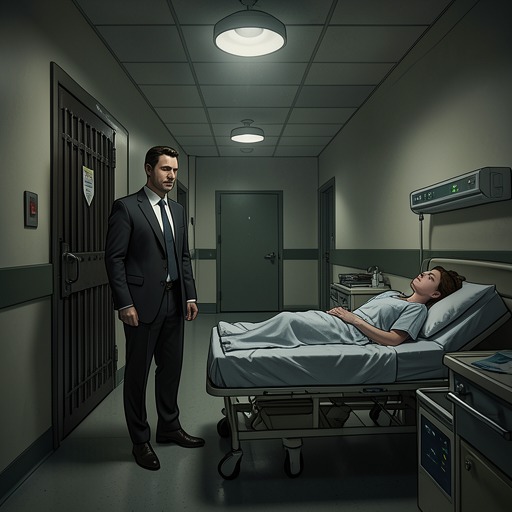
Jensen Refuses to Donate a Kidney to His Birth Mother
I'm Still Here- What didn't kill me made me stronger and sharperJensen’s refusal to help his birth mother obtain a kidney transplant is a confrontation over more than medical need: it brings his lifelong experience of rejection into conflict with Ginger Pearl’s appeal for compassion and family connection. He rejects the request and doubts Ginger Pearl’s motives, insisting on his right not to repay an absent mother with his body or labor. The refusal is not the story’s final word, however; a later family scene reveals that he eventually gives Gloria Simpson Picou a kidney.
The Request and Its Stakes
Ginger Pearl raises the subject while asking Jensen and Janae Morrison to help with a fundraiser for someone important to her who is seriously ill. Jensen initially agrees to help before Ginger Pearl hesitates and identifies the patient as his mother. The pause matters: the fundraiser is not an abstract charitable cause but an appeal that brings the most painful relationship in Jensen’s life directly into the room.
Ginger Pearl explains that Gloria Simpson Picou needs a kidney transplant and that the bills are very high. She presents helping as the right thing to do, while Jensen hears an expectation that he should act for a woman who has not acted as his mother. He refuses before the conversation can turn into an uncomplicated plea for generosity. His objection is grounded in their history, not in a denial that the illness is serious.
Why Jensen Refuses
Jensen answers Ginger Pearl’s appeal by pointing to the central injury between him and Gloria Simpson Picou: she would not acknowledge him as her son. In his view, asking him to help her now cannot be separated from the years in which she denied him recognition. His anger is therefore also a defense against being made responsible for repairing a bond that his birth mother refused to establish.
That history begins with his survival after a failed abortion at twenty-six weeks. Jensen recounts that he was left in a dark room on a table to die, and that Grace McCall, the nurse caring for him, saved him. When she contacted his birth mother, the response was that he should be left to die. Jensen consequently calls her his murderer and describes his life as mere existence rather than a life he had been allowed to claim. Against that background, Ginger Pearl’s request asks him to consider providing care to the person he associates with his attempted death.
Jensen’s refusal is also shaped by his wider history of loss and instability. He describes having been treated as an unwelcome guest and dismissed as a foster child, having slept on library steps, and having endured abuse. He frames the search for the person he calls his murderer as part of a search for his own purpose. The transplant request lands inside that unfinished struggle: it asks him to turn a traumatic origin into an obligation to the person at its center.
Suspicion and a Boundary
Ginger Pearl tries to persuade Jensen that doing something good for Gloria Simpson Picou might help the two of them see one another differently. Jensen pushes back against that possibility and anticipates the next step: being tested to find out whether he is a match. Ginger Pearl says the decision is his. The exchange makes the stakes plain without resolving them; the prospect of donation is raised, but Jensen does not consent to it in this conversation.
Later, Ginger Pearl acknowledges that finding Jensen so he could potentially give his mother a kidney was part of her reason for seeking him out. She adds that she also wanted to know him and become part of his life. Jensen does not accept that explanation as proof of affection. He says he will pay rent rather than remain indebted, and when she reaches to hug him, he pushes the embrace away. His mistrust turns a family overture into a question of whether care is genuine or conditional on what his body might provide.
Instead of accepting Ginger Pearl’s money or a place as a dependent, Jensen offers to work for what he owes. He points to repairs that need doing and says he can start with the broken banister and painting. This offer does not soften his refusal to help Gloria Simpson Picou, but it does show the terms on which he is willing to remain near Ginger Pearl: practical contribution rather than an unearned claim of intimacy. The distinction lets him keep a connection open while resisting the pressure to treat kinship as an automatic debt.
The Refusal in the Larger Story
Janae Morrison witnesses the exchange and listens as Jensen and Ginger Pearl argue. Her presence places the confrontation within a story in which Jensen has begun to form new attachments, even while his past continues to govern what he can trust. The immediate outcome is a firm no, accompanied by suspicion and a rejection of Ginger Pearl’s attempted embrace. Nothing in the encounter establishes that he has agreed to testing or promised a later donation.
The later outcome changes the meaning of that refusal without erasing it. At a Christmas family gathering, Jensen describes Gloria Simpson Picou as his mother and says he gave her his kidney so she could watch his brother and sister grow up. He sits at the head of a family table, while Ginger Pearl holds his newborn daughter, Grace Pearl McCall. The earlier boundary therefore marks a point in a difficult relationship rather than its permanent conclusion. The story records both Jensen’s right to refuse when he feels used and his eventual decision to give, placing reconciliation not in an immediate response to pressure but in a later family life that his earlier self could not yet imagine.